BLOG: DFI Participates in the White House School Choice Roundtable
By Ginny Gentles
It was an honor to join Education Secretary Linda McMahon at a White House school choice roundtable during National School Choice Week. Education freedom advocates and key administration officials celebrated the passage of the new education freedom tax credit created by H.R. 1, the Working Families Tax Cuts Act. This dollar-for-dollar federal tax credit for donations to scholarship-granting organizations (SGOs) has the potential to generate billions of dollars annually for K-12 scholarships that empower parents to choose educational environments and resources that best meet their children’s needs.
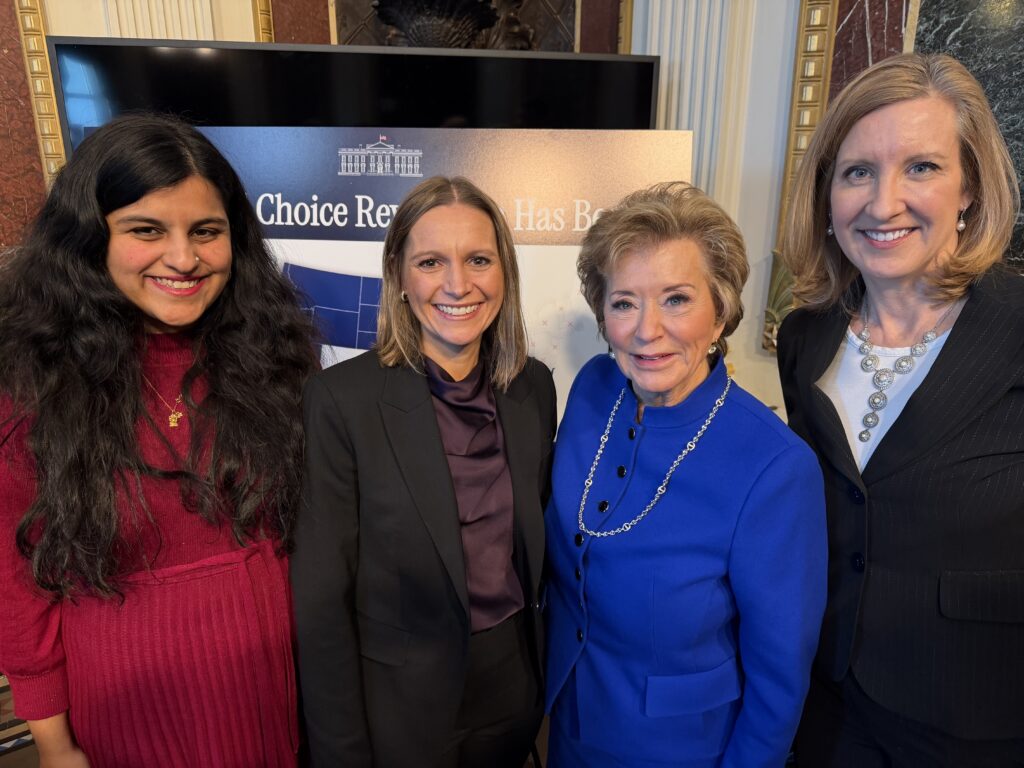
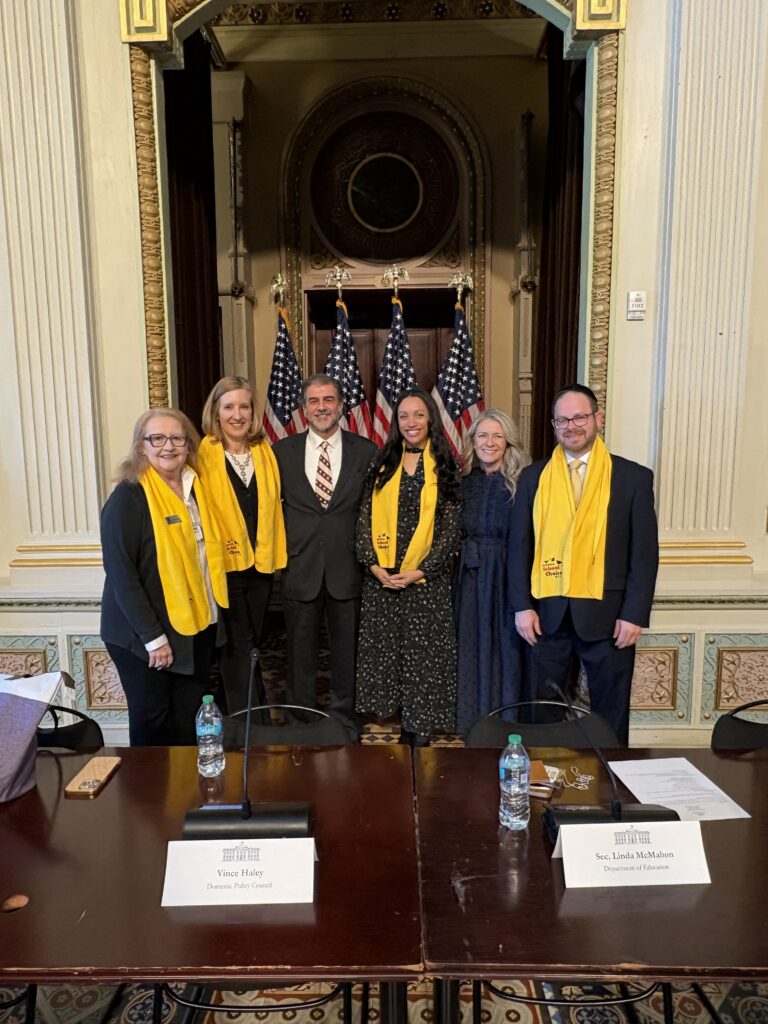
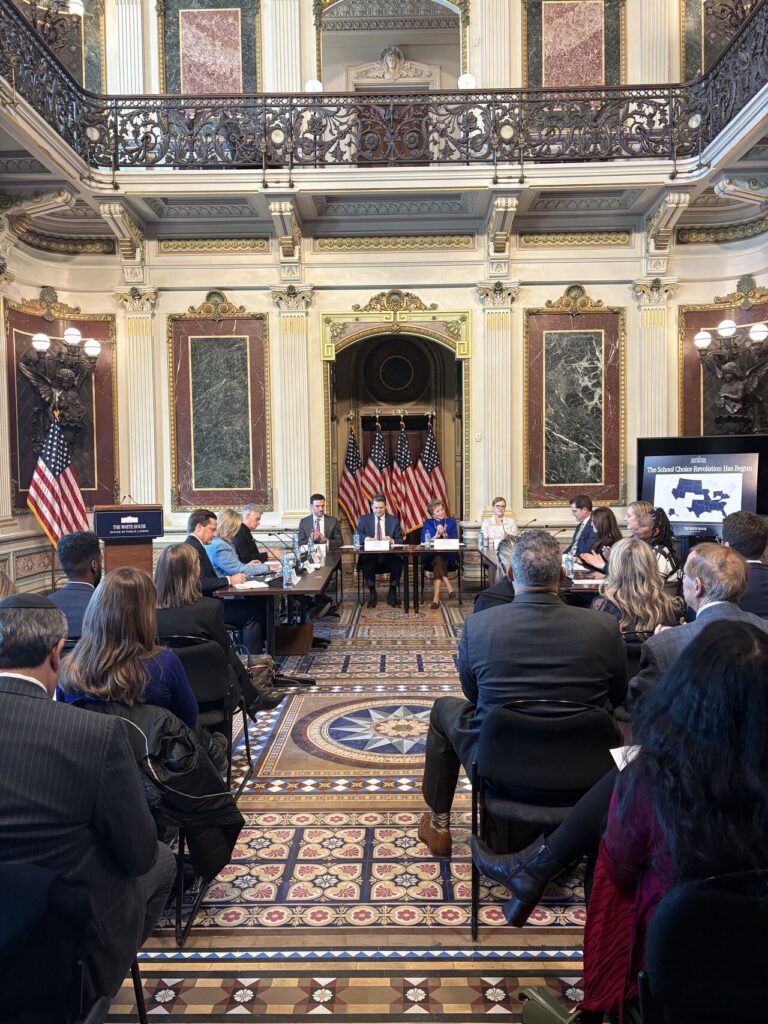
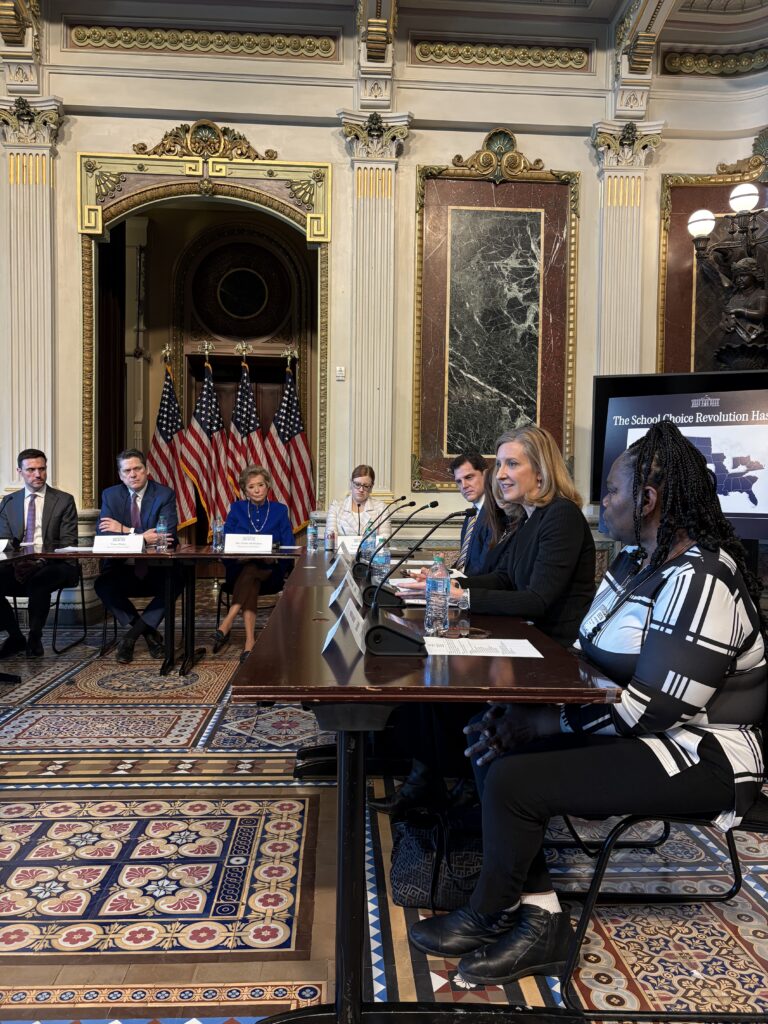
I truly appreciated the opportunity to share DFI’s perspective on the federal scholarship tax credit and our aspirations for its implementation. We think the tax credit has the transformative and historic opportunity to expand education freedom in all 50 states and DC, but only if the U.S. Department of the Treasury’s rules governing the program encourage as many taxpayers as possible to donate, as many scholarship-granting organizations as possible to participate, and as many students as possible to receive scholarships. Throughout the roundtable discussion, I stressed the importance of rulemaking that puts families – not bureaucracy or politics – at the center of implementation.
The White House school choice roundtable was an encouraging opportunity to celebrate a shared commitment to expanding education freedom and empowering families. After the event concluded, the White House recorded me describing education freedom’s progress and the tax credit’s potential.
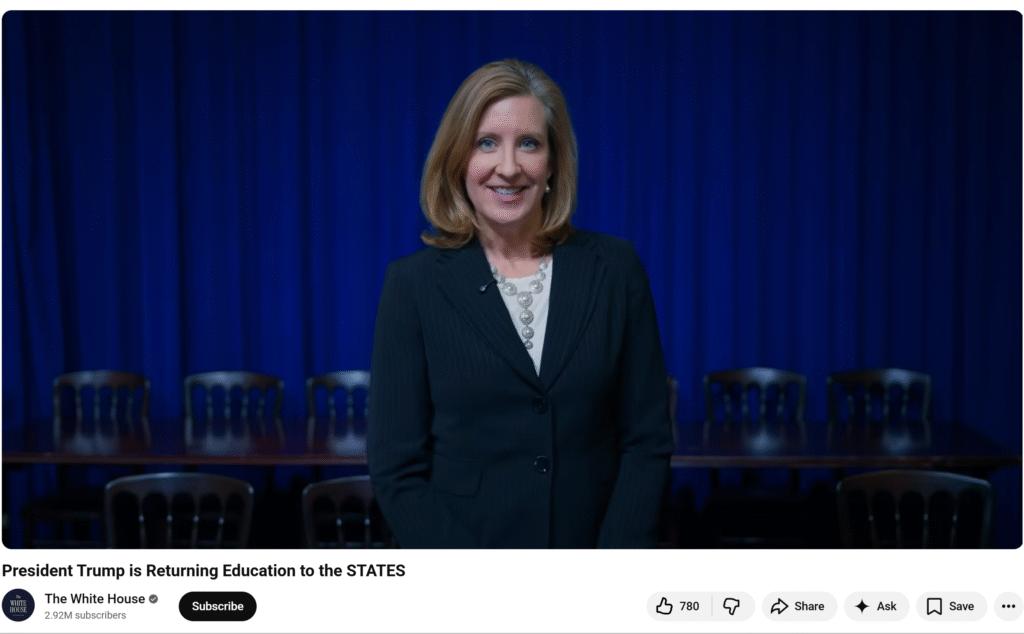
My prepared remarks:
Thank you for the opportunity to join today’s school choice roundtable. Madam Secretary, I am particularly grateful for your steadfast commitment to the federal scholarship tax credit. You’ve understood, embraced, and championed the proposal since before your confirmation. Thank you.
As my friends at the American Federation for Children put it, with the passage and implementation of the federal scholarship tax credit, “the future of American education is here.” I’m thrilled to be celebrating this exciting milestone with you all as we tally up the growing number of governors opting in and commit to a successful implementation process.
With the donations and resources scholarship-granting organizations will raise through the tax credit, funding will flow to students so that they can pursue learning environments and educational resources that best fit their needs.
This is something I’ve advocated for my entire career, and that the Defense of Freedom Institute fights for through an aggressive and relentless legal, policy, and communications strategy. Some – maybe most – of our work is behind the scenes and in collaboration with coalition partners.
DFI is a proud leader of the federal scholarship tax credit (FSTC) Coalition and, in that capacity, is very engaged in the rulemaking process. We view the FSTC as potentially the most transformative K-12 federal law ever, but, to be frank, it won’t be if things go wrong in its rulemaking process. We are grateful to the White House for keeping the rulemaking process on track and focused on serving as many students as possible across the country.
National School Choice Week 2026
Before I share our priorities on the rulemaking front, I’d like to take a moment to acknowledge that this is National School Choice Week (NSCW), my favorite work week of the year.
NSCW is a joyful celebration of education freedom, an annual opportunity to raise awareness about education options, and a reminder that school choice is about putting kids first. Over 26,000 schools planned celebratory events and service projects this year. School fairs informed families about their options, and state capital rallies reminded policymakers that their work is not done. The White House and the U.S. Department of Education have been posting fantastic social media content throughout the week, including an interactive map featuring states that have opted in to the tax credit – thank you.
Existing education freedom options
As everyone in this room knows, school choice is not just one thing. It isn’t just a program that gives parents a tuition scholarship they use to pull their child out of a residentially assigned public school and enroll in the private school of their choice. Yes, school choice – or education freedom, as we commonly call it now – empowers parents to choose a private school. But it exists in many other forms:
- With the introduction of education savings accounts, families can now use funds for approved education options beyond tuition – like tutoring, transportation, therapies, and educational technology.
- There are public school options, including charter schools (8,000 serving nearly 4 million kids), magnet schools (4,300 serving 3.5 million kids), and inter- and intra-district open enrollment.
- Microschools are an increasingly popular and innovative option.
- And homeschooling is growing by leaps and bounds (5-6% of K-12 students. Participation is increasing 5% annually – triple pre-pandemic rate).
Over 30 states have education freedom programs – scholarship programs or education savings accounts. Options are expanding annually in many states, and advocates continue to work closely with state legislators to ensure that students’ needs are priorities. But there’s more to be done.
The new federal scholarship tax credit, passed as part of the Working Families Tax Cuts Act (also known as the One Big Beautiful Bill Act), creates the potential to build on existing options and decades of school choice expansion and significantly expand education freedom in all 50 states.
The tax credit concept is not new. States like Arizona and Florida introduced state tax credits for donations to scholarship-granting organizations (SGOs) over two decades ago. 18 states have these programs in place now. What’s new is the opportunity that taxpayers will have, starting next year, to receive a dollar-for-dollar federal tax credit for donations up to $1,700 to SGOs.
Just as education freedom advocates never rest on their laurels or assume past successes will provide sufficiently for future generations of K-12 students and families, advocates for the federal scholarship tax credit are focused on getting implementation right.
Importance of rulemaking
We’re focused on rulemaking now: Around 3,500 comments were submitted to Treasury in response to a request for input on the initial stages of the rulemaking process. More than half are boilerplate comments from teacher-union activists who say nothing other than they hate “federal vouchers.” They apparently haven’t read the law, because it provides scholarships for a wide array of educational expenses, including tutoring, to all eligible students, whether they attend public, charter, private, home, or innovative school models
Other comments – from organizations like the FSTC Coalition, DFI, Invest in Education, and long-time SGOs like the Children’s Scholarship Fund and Step Up for Students – made it very clear that if you give governors too much discretion, there will be fewer choices offered to students. We believe that the implementation of the tax credit should be managed in a neutral way, prioritizing the needs of families. Please don’t let governors pick and choose their favorite SGOs and block options for students.
To be frank again, we did not want governors to be involved at all. The opt-in provision was added at the last minute during late-night legislating because the Senate parliamentarian insisted upon it.
We need rules that maximize education opportunities for students, rather than create bureaucratic layers. We’ve tried the heavy bureaucratic approach with education, and it hasn’t worked. Of course, we want to “return education to the states” and give the states more control over taxpayer funds. Power and decisions over education should also be returned to families and individuals, and they should be prioritized in the tax credit implementation process. These are charitable donations incentivized by a tax credit that are used for scholarships to individual students. The FSTC isn’t Title I.
Another priority on our rulemaking wish list: Implementation will be far more successful if any taxpayer can get a credit. The statute suggests this means that each member of a married couple filing jointly should get a credit, for a total of up to $3,400.
We are happy that the White House and you, Secretary McMahon, are here to protect the intent of the federal scholarship tax credit and ensure its success.
Informing parents
Over my career, I launched and administered a scholarship-granting organization that served low-income families in Ontario, Canada. I led the Florida Department of Education’s school choice office in the early days of the state’s scholarship programs. I was responsible for the DC Opportunity Scholarship Program at the U.S. Department of Education. None of those programs – privately-funded, state-administered, or federally created – matter if parents don’t know they exist and don’t understand how to apply.
That’s one reason I love National School Choice Week. As advocates, we must do everything we can to let parents know that they can – and in some cases should – leave their residentially-assigned school.
I hope those of us here today will spend the other 51 weeks of the year raising awareness of the many options available to parents. We don’t have to wear yellow scarves those weeks, but we do have to ensure families are informed about the opportunities to send their children to the education option that best meets their needs.
Related
PODCAST: | “Freedom to Learn:” Darla Romfo on Putting Kids First, Building a Scholarship Granting Network, & Engaging in Federal Scholarship Tax Credit Rulemaking
The federal tax credit for donations to scholarship-granting organizations could expand the Children’s Scholarship Fund’s…