BLOG: DFI Senior Litigation Counsel Don Daugherty Testifies Before Congress on Mahmoud v. Taylor
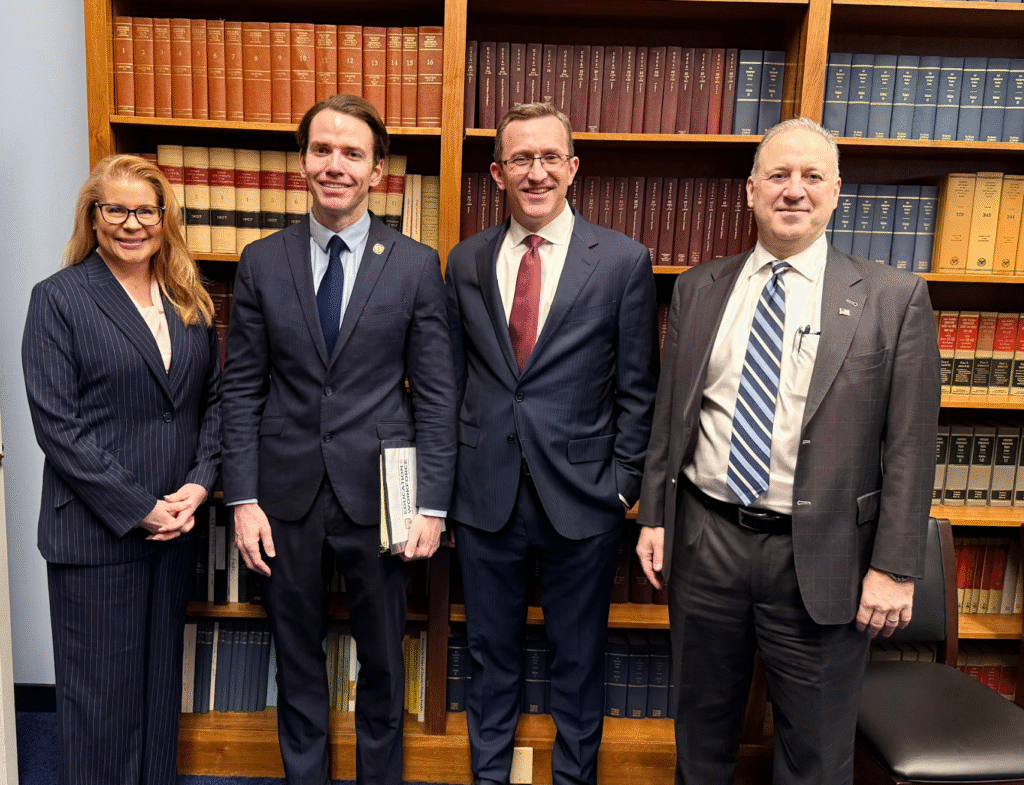
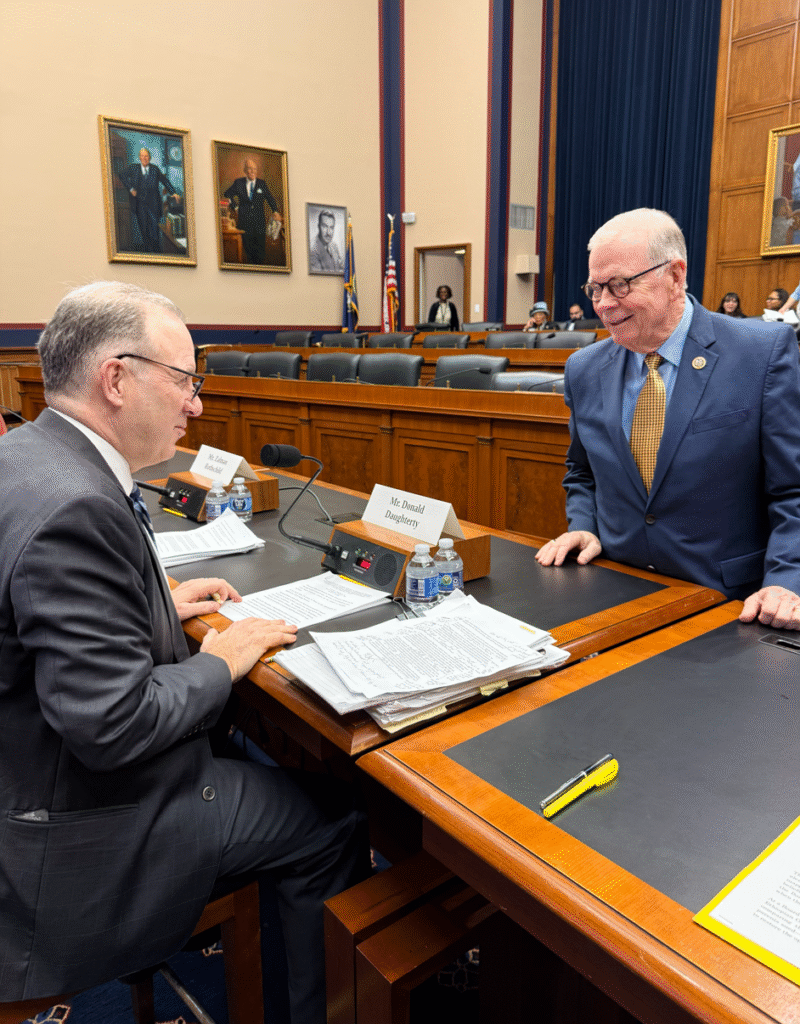
On February 10, Don Daugherty, DFI’s Senior Litigation Counsel, testified before a House Education Workforce Subcommittee on the landmark Supreme Court case Mahmoud v. Taylor. In his opening remarks, Don explains what led to this case, why the Supreme Court’s ruling matters, and what it means for families going forward.
DFI filed an amicus brief in this case on behalf of ten current and former educators—superintendents, administrators, and teachers from public school systems in several states—who have more than 150 years of combined K–12 experience. These educators shared their real-world expertise with notice and opt-out policies, helping the Court understand how modest accommodations for families are both common and workable in public schools.
Last year, the Supreme Court ruled in favor of parents, affirming that families must receive advance notice of sexually explicit classroom materials and the opportunity to excuse their children when instruction conflicts with sincerely-held religious beliefs.
Mahmoud is an important precedent for transparency, parental rights, and First Amendment protections nationwide.
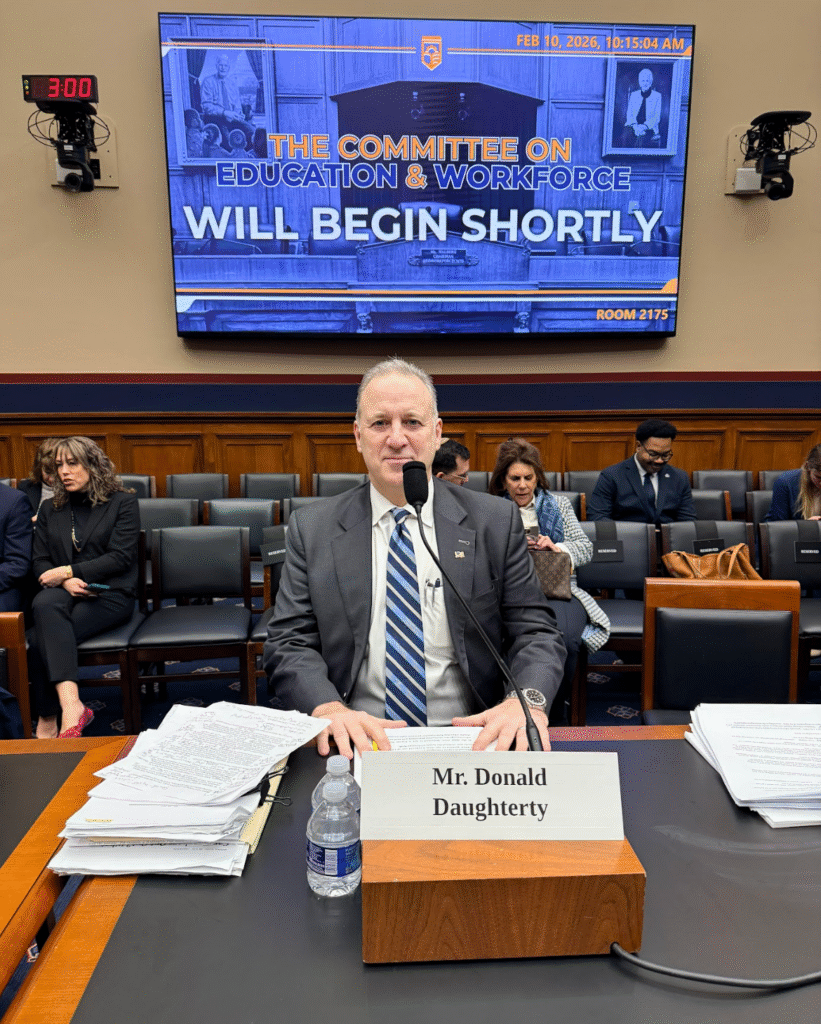
Testimony Before the U.S. House Committee on Education and Workforce Subcommittee on Early Childhood, Elementary, and Secondary Education Hearing on “Defending Faith and Families Against Government Overreach: Mahmoud v. Taylor”
Donald A. Daugherty, Jr.
Senior Litigation Counsel
Defense of Freedom Institute for Policy Studies
February 10, 2026
Chairman Kiley and Ranking Member Bonamici,
Thank you for the opportunity to testify today on the implications of Mahmoud v. Taylor, 606 U.S. 522 (2025), a case decided by the United States Supreme Court last June. My name is Don Daugherty, and I serve as Senior Litigation Counsel for the Defense of Freedom Institute (DFI). I have been a litigator for thirty-six years, spending my first three decades in private practice, and the last six years with public interest firms. While both in private practice and since, I have regularly represented parties in lawsuits, administrative proceedings, and other disputes involving issues of education reform and First Amendment rights.
Mahmoud involved a challenge under the Free Exercise Clause of the First Amendment. Specifically, the issue was whether the policy of the Montgomery County, Maryland Board of Education (the “Board”) of introducing “LGBTQ+-inclusive” storybooks into the pre-K, kindergarten, and elementary school English & Language Arts curriculum, without notifying parents or allowing them to opt their children out of participating in the storybook series, violated the parents’ free exercise right to direct the religious upbringing of their children.
The storybook series depicted Pride parades, gender transitioning, preferred pronouns, nonbinary identification, a drag queen, playground same-sex romance, and other controversial topics centered on sexuality and gender identity. The controversy was not a byproduct of otherwise innocent children’s stories: it was the point. Instructional materials provided to teachers with the series stated that the books were designed to “disrupt” children from “either/or thinking” about the sexes. If a child suggested it’s “weird” to say a girl can become a boy, the materials instructed the teacher to respond that this comment is “hurtful,” and that when each of us is born, “people make a guess about our gender.”
When the Board first introduced the series for the 2022-23 school year, Montgomery County public schools notified parents and allowed them to excuse their children from lessons involving these books. However, a few months into the school year, the Board rescinded this option for the following school year. The Board was evasive about its reasons for doing so, but primarily cited administrative difficulties caused by numerous parents choosing to opt their children out.
When the Board announced it was rescinding the opt-out option, there was tremendous parental pushback. However, at public meetings in May 2023 to discuss the matter, Board members were dismissive of parents’ concerns. For example, one board member said that it would be an impossible disruption if teachers had to “send out notices so white supremacists could opt out of civil-rights contents,” implicitly equating religious families with racists. One Board member even waved off a student who told the Board that the storybook series was “unsettling” because it contradicted the student’s religious beliefs, stating she felt “kind of sorry” for the student and speculating that the girl was merely “parroting dogma.”
Parents and students weren’t the only ones alarmed by inclusion of the storybook series. After a group of parents sued the school district over the series in Maryland federal district court, defendants produced a November 2022 memorandum from principals and teachers (the “November 2022 Memo”) showing that they shared the parents’ misgivings about the series. For example, teachers and principals worried that responses suggested by the school administration to children’s questions about the storybooks may be “dismissive of religious beliefs,” or foster “shaming comment[s] to a child.” In addition, the November 2022 Memo indicates that the administration’s suggested responses about gender being “a guess” “based on our body parts” that is “[s]ometimes . . . right and sometimes . . . wrong” are “[s]tated as a fact,” even though “[s]ome would not agree this [i]s a fact.”
After the Maryland district court and the Fourth Circuit Court of Appeals denied the parents’ request for a preliminary injunction that would have allowed them to opt their children out of lessons involving these books, the Supreme Court agreed to hear the parents’ appeal.
At the Supreme Court, DFI filed an amicus curiae brief on behalf of ten current and former educators who, collectively, had 166 total years of experience as superintendents, administrators and teachers in K-12 public school systems in ten states across the country. These amici had specific and unique expertise with “notice and opt-out” processes like those the Board initially provided, as well as otherwise making academic accommodations for students whose parents prefer for religious or other personal reasons that they not participate in portions of the standard curriculum.
DFI’s amicus brief focused on the governmental interest that the Board relied on to justify rescinding the right of parents to receive notice and to opt their children out of the storybook series. Again, the governmental interests asserted by the Board for compelling schoolchildren to read these books, starting in pre-kindergarten, boiled down largely to bureaucratic considerations, which do not justify restrictions on activity protected by the First Amendment. Based on their considerable experience, DFI’s clients very much doubted whether there was any unusually onerous administrative burden in the first place.
Reversing the lower courts, six justices concluded that the plaintiff-parents were entitled to a preliminary injunction, finding that the Board’s policy substantially interfered with the religious development of their children and imposed a burden on religious exercise similar to that struck down in Wisconsin v. Yoder, 406 U.S. 205 (1972). In Yoder, the Supreme Court exempted Amish families from Wisconsin’s compulsory education statute beyond eighth grade, holding that the government burdens the religious exercise of parents when it requires them to submit their children to instruction that poses “a very real threat of undermining” the beliefs and practices that the parents wish to instill. In Mahmoud, the Court similarly found that the challenged government action “’substantially interferes with the religious development’” of the parents’ children. Quoting Yoder, the Mahmoud Court stated that “[s]uch instruction ‘carries with it precisely the kind of objective danger to the free exercise of religion that the First Amendment was designed to prevent.’”
In his majority opinion, Justice Alito rejected the Board’s contention that Yoder was a narrow holding with little application to the facts in Montgomery County. Applying strict scrutiny, the most rigorous form of judicial review of the constitutionality of government action, the Court found that on the preliminary injunction record, the Board’s policy did not appear narrowly tailored to serve a compelling interest, as it allowed opt-outs in various other contexts, undermining its claim that the no-opt-out policy was necessary. The Court ordered the Board to notify parents in advance whenever the books or similar materials were to be used and to allow children to be excused from such instruction.
Going forward, the Mahmoud decision can be a useful tool for parents of faith to push back against overreach by public schools. For example, the right to opt out on religious grounds means nothing without the right to be given advance notice of classroom learning materials and activities; this should lead to more transparency about the curriculum, requiring that schools let parents know exactly what their children are being taught. In Montgomery County specifically, since Mahmoud, students now receive a refrigerator magnet each semester detailing the upcoming curriculum, including topics as well as books to be read; parents can then, as appropriate, opt their children out of portions that conflict with their sincerely-held religious beliefs and obtain an alternative assignment. At the same time, Mahmoud is not a license for parents to micromanage the curriculum and, inevitably, courts will need to define more clearly what this Free Exercise parental right encompasses and what it doesn’t.
Furthermore, separate from the Free Exercise Clause, the Supreme Court has recognized that under the 14th Amendment, parents have a Substantive Due Process right “to direct the upbringing and education” of their children generally, and not just in matters of religion. See Pierce v. Soc’y of Sisters, 268 U.S. 510 (1925). Some parents who objected to the storybook series had no religious faith and claimed that they objected on purely secular grounds. Although, arguably, such parents may not be covered by Mahmoud, as a practical matter, it seems unlikely that Montgomery County would force the children of these non-religious parents to participate in the storybook series if they object. But guidance and clarity from the federal courts will be needed on this issue as well.
Finally, a mystery surrounding Mahmoud is how this dispute even came to pass in the first place. That is, what critical principle was the Board trying to vindicate by litigating all the way to the Supreme Court? The plaintiff-parents, of course, wanted to affirm their fundamental right to raise their children in their chosen religious tradition and faith, and to inculcate those religious values in their children. But what did the Board hope to achieve?
Many people wondered about this.
Before the Supreme Court decided the case, several liberal commentators had questioned the Board’s decision to defend its no-opt-out policy so aggressively and all the way to the nation’s highest court, expending considerable taxpayer dollars, instead of seeking some kind of out-of-court resolution with the parents. For example, a Washington Post editorial published in April of 2025 was entitled, “Montgomery County’s unneeded Supreme Court fight.” Similarly, a New York Times opinion piece published at the same time and written by a resident of Montgomery County, was entitled, “My School District Could Have Avoided This Supreme Court Case.” Both pieces chastised the Board for its intransigence.
During oral argument, several justices indicated that they, too, were puzzled that the Board fought so hard to deny parents the right to opt their children out of these lessons. For example, Justice Kavanaugh — who pointed out that he is a lifelong resident of Montgomery County — stated that he was “a bit mystified how it came to this,” noting that “Maryland was founded on religious liberty” and expressing surprise that the Board had decided that “this is the hill we’re going to die on.” Justice Alito similarly asked the Board’s attorney, “[w]hat’s the big deal” about allowing parents to opt their children out? Even Justice Kagan said she suspected there were “a lot of non-religious parents who weren’t all that thrilled about this.” (Unfortunately, however, she ultimately sided with the rest of the liberal bloc.) By the end of the argument, it seemed clear that a strong majority of the Court was inclined to rule in the parents’ favor, and this proved to be true when the written decision was issued last June.
Although no one can read the minds of the Board members as to what they actually hoped to achieve with the case, at the least, Mahmoud revealed how disconnected some public schools have become from the families they serve. As the educators who were DFI’s clients pointed out in our amicus brief, allowing parents to opt their children out of a portion of a school curriculum is quite common in public education. This holds true for Montgomery County. See, e.g., Montgomery County, MD Public Schools, Annual Notice for Directory Information and Student Privacy.
The Board’s intransigence is also noteworthy given that the opt-out requested by the plaintiff-parents was quite modest. The parents didn’t challenge the curriculum itself or the mere presence of the books on classroom shelves or in the library. They did not seek to micromanage the curriculum in any way. But the Board wouldn’t even give the parents the modest accommodation they sought.
Even the administrative burden on school staff that the Board complained was caused by the opt-out process was largely self-inflicted. That large number of parents want to protect their children from controversial reading materials, creating more work for school staff, simply shows that the Board should never have tried to make the material part of the curriculum in the first place.
The First Amendment, and the Bill of Rights generally, exist to protect certain individual rights from a tyranny of the majority. As public schools increasingly encroach on aspects of a child’s upbringing that are beyond the core curriculum of reading, writing, and mathematics, and that were previously left to parents, the importance of constitutional bulwarks like the First Amendment only increases. In Mahmoud, the Supreme Court wisely reinforced the Free Exercise bulwark.
At the same time, the voters of Montgomery County, as well as voters for school boards anywhere in the country, cannot allow themselves to be treated as if they are a captive audience. Some insight into the Board’s mindset may come from the meaning of the term “woke” itself. The term is sometimes used to describe people who would rather silence their critics than listen to, or engage with, them. This obviously is not a good quality for elected representatives to possess, but it seems to be part of the explanation here. Voters should not accept it.
Teaching children the tolerance and respect for others that is required in a pluralistic, civil society like ours is different from indoctrinating them with novel ideologies that run directly counter to their families’ sincerely-held religious beliefs. Mahmoud shows that parents can and must speak up and take back their children’s public schools, and that the First Amendment can assist them in doing so.
Thank you.
Related
PRESS RELEASE: Federal Grants Tied to Discriminatory Intersectionality Framework Reach $257 Million
WASHINGTON — A new report from the Defense of Freedom Institute for Policy Studies (DFI) and the Legal Insurrection Foundation (LIF)…
PRESS RELEASE: DFI Urges the Education Department to Investigate Four Women’s Colleges for Violating Title IX and Engaging in Substantial Misrepresentations to the Public
WASHINGTON — Today, the Defense of Freedom Institute for Policy Studies (DFI) filed complaints with the U.S.